
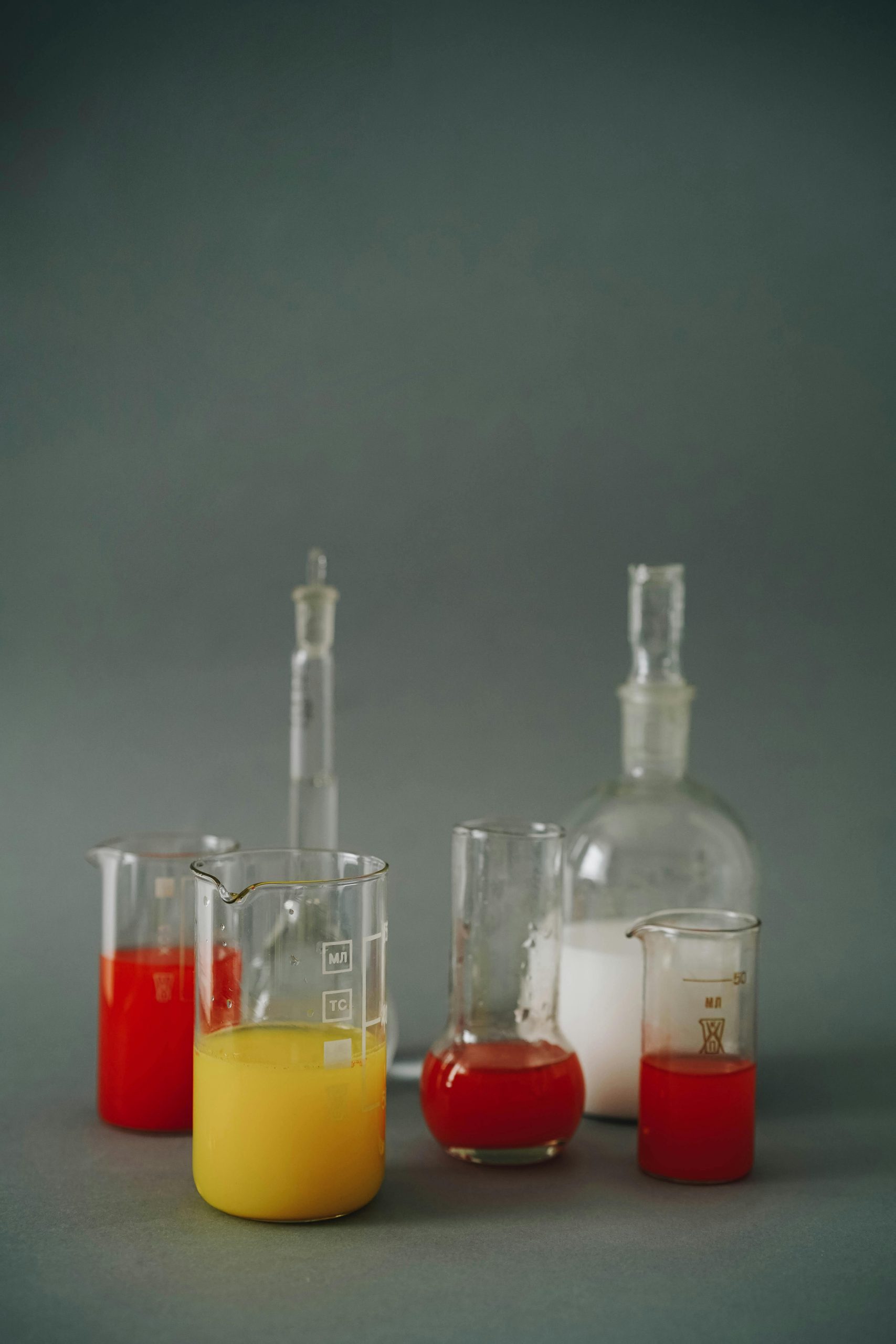
Learn about an example of homogeneous mixture, why it stays uniform, and how these solutions power our world.
Understanding the Perfect Blend: Exploring an Example of Homogeneous Mixture
Have you ever stirred a spoonful of sugar into a hot cup of tea and watched it completely disappear? You know the sugar is still there—you can taste the sweetness—but you can’t see the individual grains anymore. No matter how hard you squint, the liquid looks like one single, uniform substance.
This everyday kitchen magic is actually a perfect an example of homogeneous mixture. In the world of chemistry, we are surrounded by these seamless blends. From the air you are breathing right now to the stainless steel fork on your dinner table, homogeneous mixtures are the silent backbone of our physical reality.
But what exactly makes a mixture “homogeneous” rather than “heterogeneous”? And why does it matter? In this guide, we are going to break down the science of uniformity, look at real-world applications, and help you identify these blends in your daily life.
What Exactly Is a Homogeneous Mixture?
To understand an example of homogeneous mixture, we first have to look at the definition of a mixture itself. A mixture is simply what you get when you combine two or more substances without a chemical reaction taking place.
The “homogeneous” part comes from the Greek roots homos (meaning same) and genos (meaning kind). Essentially, it means the mixture is the same throughout. If you took a microscopic sample from the top of the container and another from the bottom, they would be identical in composition.
The Core Characteristics
- Uniformity: The components are distributed evenly at a molecular level.
- Single Phase: You only see one state of matter (solid, liquid, or gas).
- No Settling: If you leave the mixture sitting on a counter, the parts won’t separate over time.
- Physical Separation: Even though they are perfectly blended, you can still separate the parts using physical methods like evaporation or distillation.
Saltwater: A Classic Example of Homogeneous Mixture
If you’re looking for the ultimate textbook an example of homogeneous mixture, look no further than a glass of saltwater.
When you drop salt ($NaCl$) into water ($H_2O$), the water molecules surround the salt ions and pull them apart. This process, called dissolution, continues until the salt is spread so thinly and evenly that it becomes a “solution.”
Why Saltwater Stays Mixed
Unlike a bottle of oil and vinegar dressing—which you have to shake every thirty seconds—saltwater is stable. Because the salt particles are so incredibly small (typically less than 1 nanometer in diameter), gravity isn’t strong enough to pull them to the bottom. They stay suspended in a permanent, uniform dance with the water molecules.
Is It a Solution or Just a Mixture?
You might hear the terms “solution” and “homogeneous mixture” used interchangeably. That’s because every solution is, by definition, a homogeneous mixture.
However, not every mixture is a solution. To keep things simple, remember the two main players in any an example of homogeneous mixture:
- The Solute: The substance being dissolved (like salt or sugar).
- The Solvent: The substance doing the dissolving (like water or alcohol).
Beyond the Liquid: Solid and Gaseous Examples
Most people think of liquids when they think of mixtures, but some of the most important blends in our world are actually solids or gases.
1. The Air We Breathe
Believe it or not, the air around you is an example of homogeneous mixture. It isn’t just “oxygen.” It is a precise blend of:
- 78% Nitrogen
- 21% Oxygen
- 1% Argon, Carbon Dioxide, and other trace gases.
Because these gases are constantly moving and mixing, the air in your living room has roughly the same percentage of oxygen as the air in your kitchen.
2. Metal Alloys (Solid Solutions)
Think about a brass trumpet or a gold ring. Pure 24k gold is actually very soft and easily bent. To make it durable enough for jewelry, jewelers mix it with metals like copper or silver.
Once melted and blended, the resulting alloy is a solid an example of homogeneous mixture. You can’t see “streaks” of copper in an 18k gold ring; the color and strength are uniform throughout the entire piece.
Homogeneous vs. Heterogeneous: How to Tell the Difference
The easiest way to identify whether you are looking at an example of homogeneous mixture is the “Eye Test.”
If you look at a bowl of cereal and milk, you can clearly see the flakes and the liquid. That is a heterogeneous mixture because the parts are physically distinct. If you take a spoonful, one might have three flakes and another might have none.
| Feature | Homogeneous | Heterogeneous |
| Appearance | Uniform throughout | Visible different parts |
| Particle Size | Atomic/Molecular | Large/Visible |
| Example | Vinegar | Italian Dressing |
| Separation | Requires energy (Boiling) | Easy (Filtering/Sorting) |
Real-World Applications of Homogeneous Mixtures
Understanding how to create and maintain these mixtures is vital for several multi-billion dollar industries.
Medicine and Healthcare
When you receive an IV drip at a hospital, that saline solution is a precise an example of homogeneous mixture. If the salt concentration varied from one drop to the next, it could be dangerous for the patient. Uniformity ensures a steady, predictable delivery of medication.
The Food Industry
Think about a bottle of Coca-Cola. Whether you take the first sip or the last, the flavor, carbonation, and sweetness are identical. Food scientists spend years perfecting “homogenization” processes—especially in dairy—to ensure that the cream doesn’t separate from the milk, keeping the product smooth and consistent.
How to Separate a Homogeneous Mixture
One common misconception is that because these mixtures are “perfectly blended,” they are stuck that way forever. That isn’t true. Since no chemical bond was formed, we can use physics to pull them apart.
- Evaporation: If you boil saltwater, the water turns to steam, leaving the salt crystals behind.
- Distillation: This is used to separate liquids with different boiling points. It’s how we turn fermented mash into high-proof spirits or crude oil into gasoline.
- Chromatography: This fancy-sounding technique is used to separate different pigments or chemicals, often used in forensics to analyze ink or blood samples.
Common Myths About Mixtures
Myth: All clear liquids are homogeneous mixtures.
- Truth: Not necessarily. Pure distilled water is a “pure substance,” not a mixture. To be a mixture, you need at least two different things mixed together.
Myth: You can always separate them with a filter.
- Truth: Standard filters (like coffee filters) cannot catch the particles in an example of homogeneous mixture. The particles are so small they slip right through the holes in the paper along with the solvent.
Frequently Asked Questions
Is coffee a homogeneous mixture?
Black coffee is a great an example of homogeneous mixture. Once the coffee oils and compounds are extracted into the hot water, they stay evenly distributed. However, if you add a lot of ground cinnamon that settles at the bottom, it becomes heterogeneous!
Is blood a homogeneous mixture?
This is a trick question! To the naked eye, blood looks homogeneous. But under a microscope, you can clearly see red blood cells, white blood cells, and platelets floating in plasma. Therefore, blood is technically a heterogeneous mixture (specifically a colloid).
Why is vinegar considered homogeneous?
Vinegar is a solution of acetic acid in water. Because the acetic acid molecules are completely dissolved and evenly spread, every drop of vinegar has the same acidity level.
The Takeaway: Why Uniformity Matters
Whether we are talking about the steel beams holding up a skyscraper or the cup of tea in your hand, the concept of an example of homogeneous mixture is about reliability. We rely on these mixtures to be the same from top to bottom, ensuring that our medicines work, our food tastes right, and our tools don’t break.
The next time you enjoy a smooth glass of lemonade or look up at the blue sky, take a second to appreciate the chemistry of the “perfect blend.” It is a reminder that sometimes, the most complex things in nature are the ones that look the most simple.
In conclusion, identifying an example of homogeneous mixture is as easy as looking for uniformity. If it looks the same throughout and doesn’t settle over time, you’ve likely found a solution to your chemistry curiosity.