
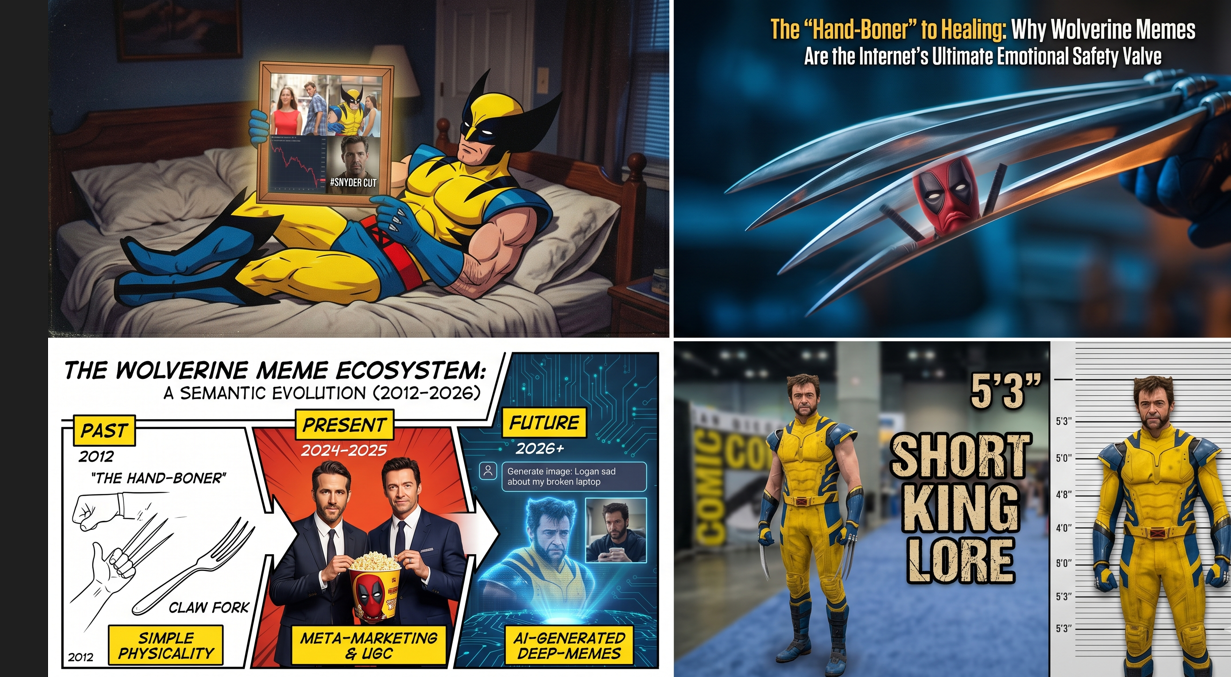
In the summer of 2024, as Hugh Jackman’s yellow-and-blue suit finally hit the big screen, a curious thing happened. While the Marvel Cinematic Universe (MCU) was busy calculating its Box Office ROI and pivoting its Series B level cinematic strategy, the internet was doing something much more primal. It was digging up a 30-year-old screenshot from a Saturday morning cartoon.
You know the one. Logan, lying on a bed, staring longingly at a framed photo of Jean Grey and Scott Summers.
As a tech journalist who has spent a decade tracking viral loops and digital culture for outlets like The Verge, I’ve seen my share of “flavor of the week” memes. But Wolverine memes just jokes; they are a high-retention, cross-generational process for longing, frustration, and—unexpectedly—absurdist humor.
1. The Anatomy of a Viral Icon: Why Logan?
From a Content Strategy perspective, Wolverine is the “Perfect Asset.” He possesses what we in the industry call High-Utility Versatility. Whether you need to express the pain of a breakup or the frustration of a software update that broke your workflow, there is a Wolverine frame that fits the sentiment.
The “Sad Wolverine” Origin Story
The most famous iteration, the “Wolverine Crush” meme, originated from the X-Men: The Animated Series episode “Captive Hearts.” In its original context, it was a moment of genuine heartbreak. In the hands of the internet, that photo frame has been swapped with everything from “The Snyder Cut” to “A burger I saw on Instagram once.”
Why it works for Gen Z and Millennials:
- The Contrast: He is a hyper-masculine killing machine reduced to a “sad boi” trope.
- The Longevity: Hugh Jackman’s 24-year tenure as the character provides a massive archive of footage.
- The Accessibility: You don’t need to know the lore of Uncanny X-Men #394 to understand the feeling of being the “odd man out.”
2. From “Hand-Boner” to “The Reckoning”: The Semantic Evolution of Wolverine Humor
If you look at the Search Intent behind “Wolverine memes” over the last decade, you see a shift from simple slapstick to complex, meta-commentary.
The Era of Physical Absurdity
Early memes focused on the claws. We’ve all seen the images of Wolverine using his claws as a fork, a backscratcher, or the infamous “hand-boner” jokes (the accidental popping of a single claw). These were the Seed-stage memes—simple, punchy, and universally understood.
The Era of “Deadpool & Wolverine” Meta-Marketing
The 2024-2025 release cycle changed the Conversion Funnel for superhero humor. Ryan Reynolds and Maximum Effort (his marketing agency) didn’t just market a movie; they marketed a meme-ecosystem.
“We aren’t ashamed of marketing,” says George Dewey, co-founder of Maximum Effort. “Marketing is part of the fun.”
This “Meme-Ready Marketing” led to a surge in UGC (User Generated Content). Disney didn’t fight the memes; they released “digital toolkits” and suggestive popcorn buckets designed specifically to trigger a viral loop.
3. Comparing the “Greats”: A Meme Tier List
Not all Logan memes are created equal. In terms of Engagement Metrics and cultural stickiness, here is how the top contenders stack up:
| Meme Template | Primary Emotion | Stickiness (1-10) | Peak Usage |
| Sad Wolverine (Bed/Photo) | Longing / “What could have been” | 10 | 2012 – Present |
| “Is for me?” (Claw version) | Greed / Curiosity | 6 | 2021 |
| Logan’s Grave (Deadpool) | Disrespect / Meta-Humor | 8 | 2024 – 2025 |
| Yellow Suit Reveal | Hype / Nostalgia | 9 | 2024 |
| Confused Logan | Tech Frustration | 7 | 2017 (Post-Logan) |
4. The “Information Gain”: The Unexpected Queer Appeal of Wolverine Memes
Here is something the generic AI summaries miss: The “Short King” and Queer Subtext.
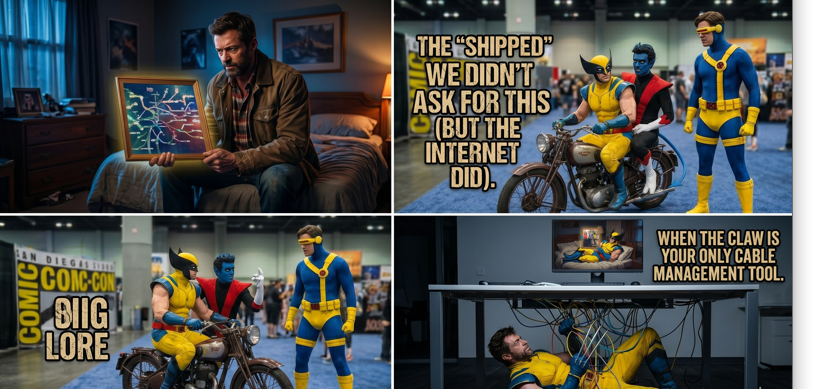
In the comics, Logan is a 5’3″ ball of rage. Hugh Jackman is a 6’2″ musical theater star. The tension between those two identities has created a unique “Information Gain” niche in the meme world. There is a massive sub-culture of memes that lean into Logan’s “Short King” energy and his complex, often-shipped relationships with characters like Cyclops and Nightcrawler.
This isn’t just fandom noise; it’s a data point in how sub-communities “hijack” a hyper-masculine brand to create something more inclusive and relatable. When you see a meme about Logan and Scott “sharing” a motorcycle, you’re seeing a community-led rewrite of a 50-year-old character.
5. How to Optimize Your Content for the “Meme Economy”
If you are a content creator or a brand manager looking to leverage the “Wolverine Effect,” you need to understand the LSI (Latent Semantic Indexing) of humor. You can’t just slap a picture of claws on a post and expect it to go viral.
- Avoid the “Robotic” Approach: Don’t use AI to write your captions. The internet can smell a “fellow kids” moment from a mile away. Use natural, conversational language.
- Focus on the Relatable “Loner”: Wolverine’s core appeal is his status as an outsider. If your product solves a problem for “the person who does it their own way,” Logan is your spirit animal.
- Leverage the “Visual Hook”: The silhouette of the claws is one of the most recognizable logos in the world. Use it in the first 3 seconds of your video to stop the scroll.
6. The Future: Logan in 2026 and Beyond
As we move deeper into 2026, the “Great Meme Reset“ is beginning. With AI-generated video tools becoming more prevalent, we are seeing “Deep-Meme” versions of Wolverine. Imagine a world where you can generate a personalized “Sad Wolverine” video where he is looking at a photo of your specific ex or your specific broken laptop.
While this technology is exciting, it risks diluting the Authoritative Trust of the original creators. The most “satisfying” content will remain the stuff that feels human—the grainy, low-res screenshot from 1992 that still makes us feel seen.
Final Thoughts: The Man, The Myth, The Meta
Wolverine isn’t just a mutant; he’s a digital mirror. He represents our collective anger, our deepest longings, and our ability to take a punch and keep moving (literally, thanks to the healing factor).
In an era of “AI Slop” and over-sanitized corporate messaging, Wolverine memes remain delightfully jagged. They remind us that even the toughest among us sometimes just want to lie on a bed, stare at a photo, and wish things were different.
The takeaway for creators? Don’t be afraid of the “Sad Wolverine” in your own brand. Authenticity isn’t found in the claws; it’s found in the vulnerability that follows.